Excelsa coffee, once regarded as the fourth coffee variety alongside Arabica, Robusta and Liberica, is now reclassified as a variety of Coffea liberica; however, its unique characteristics remain noteworthy. This rare and exotic species is known for its tart, fruity, and complex flavour profile. Although today, Excelsa is mainly cultivated in Southeast Asia (including Vietnam and the Philippines) and India, its initial discovery occurred in 1903 in Central Africa, known as Coffea dewevrei or Dewevreie (San Max, 2021). Many believed this coffee variety to be a distinct species within the Coffea genus; however, it was not until 2006 that it received official recognition as the Dewevrei variety of the Liberica species.
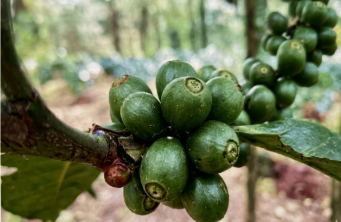
Numerous scholars and enthusiasts have posited that this particular coffee variety constitutes a distinct species within the Coffea genus; however, it was not until 2006 that it attained formal acknowledgement as the Dewevrei variety of the Liberica species. Because of the prior ambiguities surrounding the classification of excelsa, its trajectory within the contemporary coffee marketplace has engendered considerable confusion, which leads to broader generalizations and synonymous applications of these designations. This, in turn, results in a dearth of reliable data about accurate production levels. Furthermore, it may also be accountable for a decline in the quality of Excelsa coffee. This scenario presents farmers with minimal motivation to adopt quality control measures. The International Coffee Organization (ICO) has refrained from providing official statistics regarding the production or trade of excelsa coffee because the demand for both Excelsa and Liberica coffee is not deemed commercially significant.
Excelsa thrives optimally at elevations ranging from 1,000 to 1,300 meters, unlike Arabica and Robusta. It manifests as an arboreal (tree-like) organism rather than merely a shrub. This characteristic necessitates vertical space for its growth, as opposed to expanding laterally into the terrestrial environment. However, although it is known for its productivity and resilience, managing Excelsa poses significant challenges due to its requirement for extensive care.
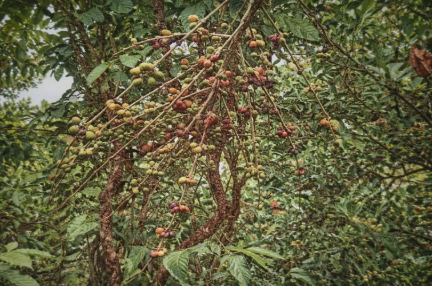
The foliage of the Excelsa plant is notably large (averaging 26 cm in length and 13 cm in width) and possesses a leathery texture. Its floral structures exhibit multiple blooms throughout the harvesting season, yet fruit maturation typically spans approximately one full year. These flowers surpass the size of those found on Arabica and Canephora plants. Furthermore, Excelsa yields asymmetrical beans that measure, on average, around 9 mm in length and 6 mm in width (SanMax).
The size of Excelsa beans resembles that of Liberica; however, they are somewhat smaller in dimension. Their beans possess an asymmetrical, almond-like shape akin to those of Liberica. A tart and fruity flavor profile characterizes this variety, including dark berries, citrus, and tamarind. The taste is light yet full-bodied, offering coffee drinkers a multilayered sensory experience. Although excelsa often possesses a bright, wine-like acidity, it is somewhat nutty and woody in character yet less smoky compared to Liberica. Its caffeine content parallels Arabica and Liberica but is lower than Robusta. This attribute results in a milder energy boost when compared to the more robust effects of strong Robusta or Kapeng barako (Coffea liberica).