Robusta coffee variety, as a significant cash crop, plays a pivotal role in Indonesia's agricultural landscape. According to Index Mundi, Indonesia ranks as the world's third-largest producer of Robusta, trailing only behind Brazil and Vietnam. The extensive expanses of suitable land for coffee cultivation and diverse microclimates render it particularly advantageous for producing Robusta coffee. Mia Lakhsmi Handayani, a Q Grader specializing in Robusta in Indonesia, asserts that "These conditions [in Indonesia] also mean robusta flavors can range from more soft, subtle coffees with notes of chocolate and fruit grown in Central Java, to more intense flavors of vanilla and chocolate, like robusta grown in Sumatra" (Perfect Daily Grind, 2022).
The majority of farmers in Indonesia are smallholders who are cultivating coffee on approximately one or two hectares of land. Because many of these smallholder farmers grow coffee primarily for subsistence, they frequently find themselves with insufficient funds to reinvest in their agricultural practices, this results in quality control becoming a significant concern. However, despite the abundance of coffee production in Indonesia, there is a need to enhance both quality and yields. For this reason, coffee farmers have initiated the development of this new breed of coffee.
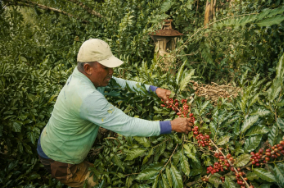
BP 358 represents a high-yielding Robusta coffee variety meticulously developed in Indonesia within the framework of a government breeding initiative to enhance Robusta production. The goal was to create a cultivar that would be esteemed for its robust disease resistance, commendable cup quality, and adaptability to tropical climates. Indeed, it stands as the most extensively cultivated Robusta clone within Indonesia, frequently employed in commercial coffee production. This breed has been selected specifically for its impressive productivity and resilience against pests and diseases.
Notably, this variety is recognized because the plant exhibits rapid growth and a robust structure characterized by strong branches. Furthermore, it is comparable to other varieties by its remarkably high yield than traditional Robusta strains, demonstrating exceptional suitability for low to mid-altitude regions (ranging from 200 to 800 meters above sea level). Moreover, BP 358 can resist coffee rust and other prevalent coffee diseases and tolerate pests and environmental stresses. Thus, it emerges as a particularly advantageous choice for commercial farms, although some may argue that reliance on a single variety could pose risks.
In the realm of cup quality and flavor profile, BP 358 surpasses standard Robustas in a manner that renders it a favored selection for espresso blends characterized by a robust body, opulent crema, elevated caffeine content, and a trace of subdued bitterness. These attributes particularly suit instant coffee, espresso, and various commercial blends. Indonesian farmers extensively cultivate this variety across regions such as Sumatra, Java, and Sulawesi; however, it is also utilized in Vietnam and other nations engaged in Robusta production for large-scale coffee cultivation. Because of its prolific output, BP 358 holds significant importance due to its high yield and disease resistance, presenting a lucrative opportunity for farmers. It is additionally advantageous for espresso and commercial coffee blends due to its superior cup quality. This variety plays a pivotal role in Indonesia's Robusta coffee sector, which has enabled the country to emerge as one of the globe's preeminent producers.